Reverse Phone Lookup Using OSINT: What Information Can You Find?
Learn how phone number OSINT works and what information can be discovered from publicly available phone data.
A phone number looks like a string of digits, but its structure carries information: the country, often the number type, and sometimes the region or original operator. Combined with public web data, it can tell you whether a caller is a registered business, a known scam source, or a number with no public footprint at all.
Phone numbers are also harder to throw away than email addresses. A free webmail account takes seconds to create; a number depends on finite telecoms infrastructure, so a number that has been published for years builds up a history in directories, filings, and listings. That history is what reverse phone lookup with OSINT is really looking for.
Key Findings at a Glance
| Finding | Figure | Source |
|---|---|---|
| Median loss when a reported US fraud started with a phone call | $1,500, vs $600 for email | FTC, 2024 data |
| Ofcom drama numbers that libphonenumber still accepts as valid | 51 of 60 (17 of 20 ranges) | Our test |
| US 555-0100 to 555-0199 numbers accepted as valid | 500 of 500 | Our test |
| Written forms of one number parsed correctly without a country hint | 4 of 10; with the wrong hint, 6 became different numbers | Our test |
| Regions where mobile and landline numbers share ranges | 16 of 245, including the US, Canada, and India | Our test |
| Holehe OSINT phone searches returning an Instagram result | 9 of 9, including 4 numbers that cannot be in service | Our test |
How the data was produced. All tests ran on October 23, 2026. Numbering tests used Google’s open-source libphonenumber (Python package phonenumbers 9.0.41). Site tests used the Holehe OSINT homepage phone search from a single connection. We searched only numbers that do not belong to private individuals: the British Museum’s published switchboard and box office, and numbers that Ofcom and NANPA reserve for fiction. Every chart below states its method, and the full list is in Data Sources and Methodology.
Why Phone Numbers Matter: The Fraud Context
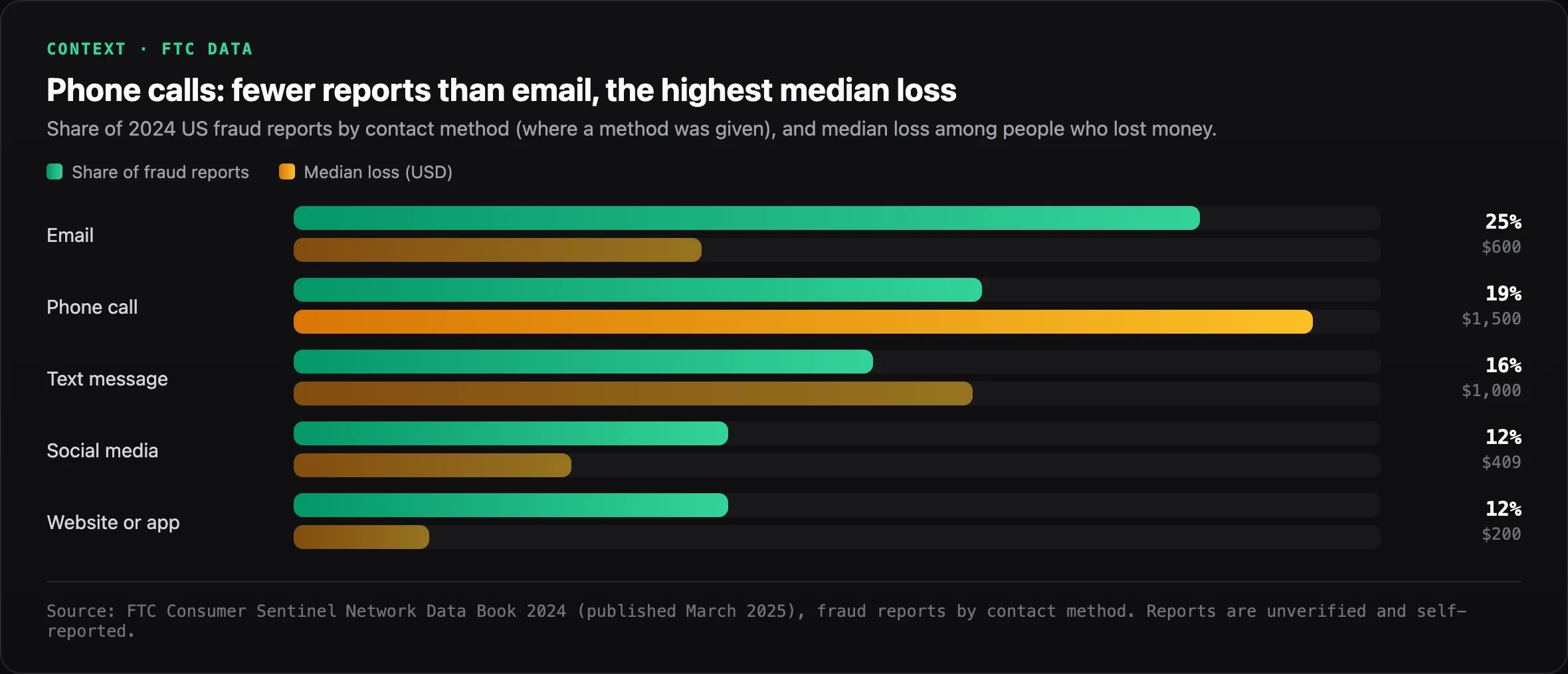
In 2024 the FTC’s Consumer Sentinel Network took in about 6.5 million reports, 2.6 million of them about fraud, with reported fraud losses of $12.5 billion. Email was the most common contact method and phone calls the second. But phone calls had the highest median loss of any contact method at $1,500, against a median of $497 across all fraud reports. A caller can build trust and pressure a victim in real time in a way an email cannot, which is why checking a number before acting on a call is worth the few minutes it takes.
These are unverified, self-reported figures from people who chose to report, so they show patterns rather than the full scale of phone fraud.
What Is Phone OSINT?
Phone OSINT is the analysis of publicly available information related to a phone number. It works on three layers:
| Layer | What it tells you | Typical sources | Main caveat |
|---|---|---|---|
| Numbering data | Country, number type, geographic area, original range holder, time zone | National numbering plans, libphonenumber | Describes the number range, not the person or the current carrier |
| Platform signals | Whether the number is linked to accounts or business messaging profiles | Account and contact checks, a business’s own “click to chat” links | Checks can give false positives; recycled numbers carry old links |
| Public records | Where the number has been published, by whom, and for how long | Business directories, company websites, PDFs, filings, archived pages, spam reports | Old listings may refer to a previous holder of the number |
It does not include subscriber records held by phone companies. Those are private and only available to authorized parties through legal process.
Information Available From Phone Numbers
Basic Information
- Country code: the leading digits after the plus sign identify the country or region (for example +44 for the United Kingdom).
- Region: in countries with geographic area codes, a landline prefix maps to a city or area. Mobile numbers usually carry no location.
- Carrier: the operator a number range was originally assigned to. Because of number portability, the current carrier may be different.
- Timezone: derived from the country and, where available, the area code. This helps judge whether a call at 3 a.m. local time makes sense.
- Number type: mobile, fixed line, toll-free, premium-rate, or VoIP, where the numbering plan distinguishes them.
Public Information
- Search engine mentions on websites, PDFs, and forums
- Business listings and company contact pages
- Spam reports from call-reporting communities
- Community reports in classified ads and marketplace listings
Reverse phone lookup tools collect these data points without accessing private records, making phone OSINT a useful part of any digital investigation.
Layer 1: What the Digits Say
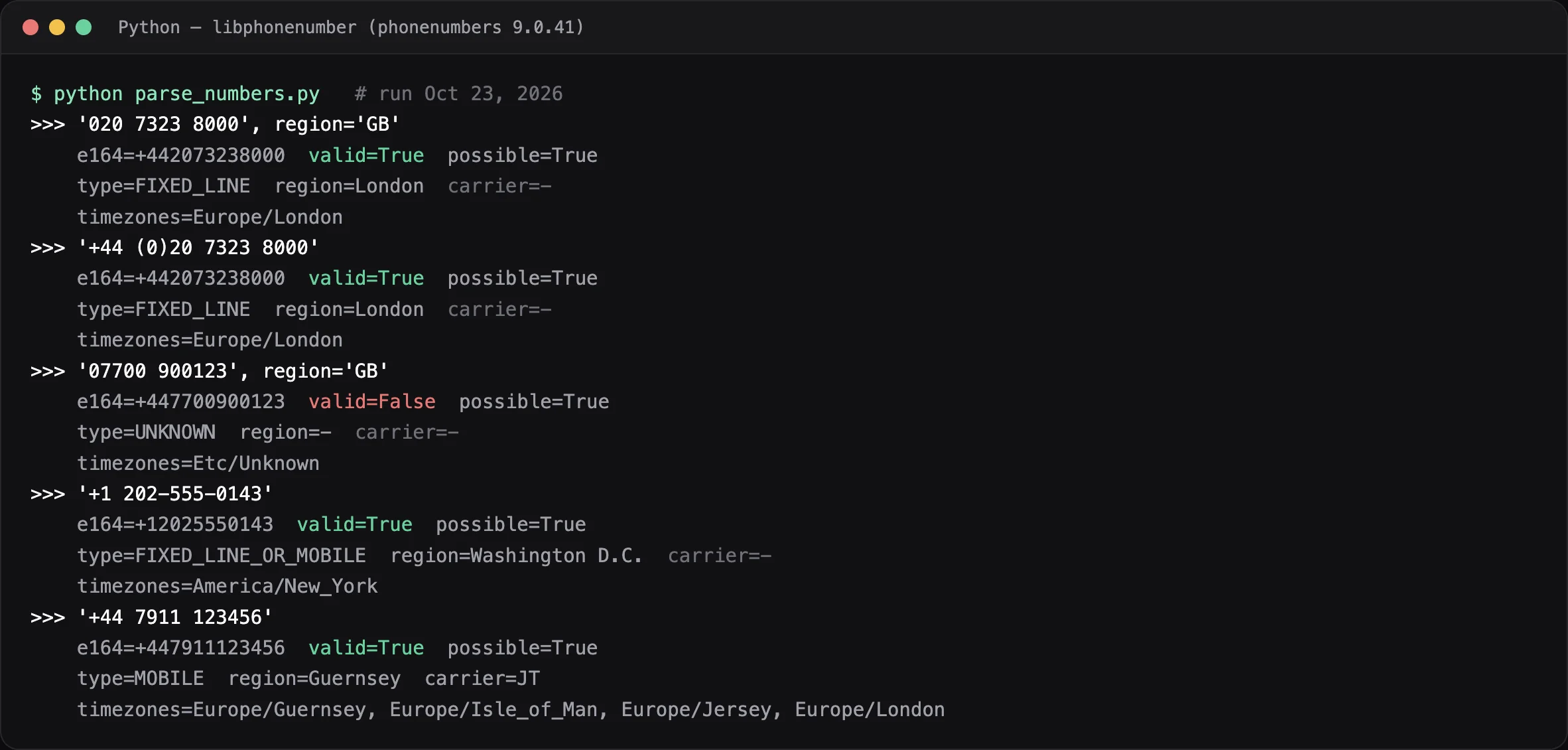
phonenumbers 9.0.41, October 23, 2026). Two written forms of one number normalize to the same E.164 value. The library cannot always tell real numbers from reserved ones, and it returns no carrier for US numbers.Four lessons from this output:
- Normalize first.
020 7323 8000(with the country set to GB) and+44 (0)20 7323 8000both become+442073238000. - “Valid” means the number fits the plan, not that it is in service.
+1 202-555-0143is valid by format, although NANPA reserves 555-0100 to 555-0199 as fictitious, non-working numbers. - The type can be vague. In the North American plan, mobile and landline numbers share the same ranges, so the library returns
FIXED_LINE_OR_MOBILE. It can never tell you whether a line is VoIP. - Carrier means range holder.
+44 7911 123456returns the operator that holds the range (JT) and a region of Guernsey. A ported number keeps its prefix, so this may not be the operator that serves the line today.
How often does “valid” mean real?
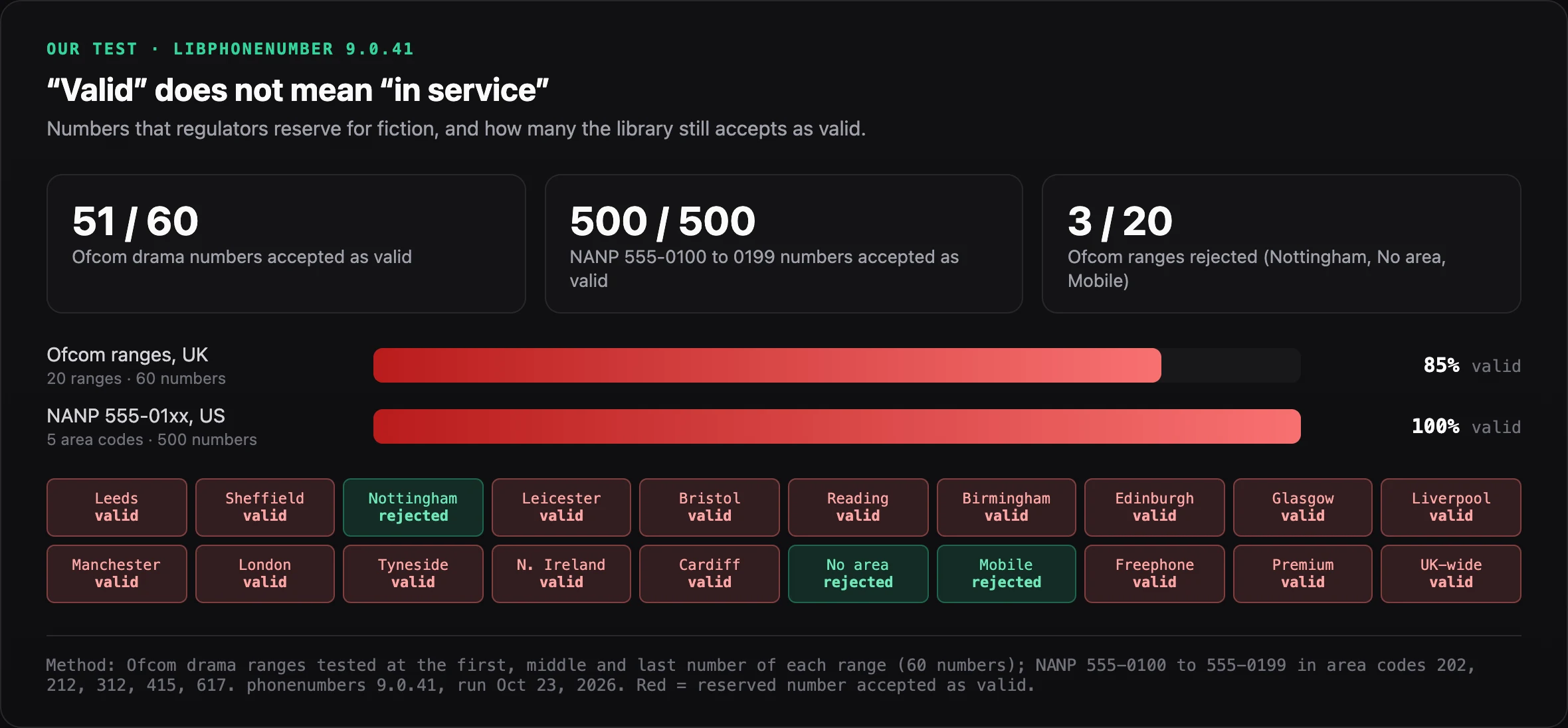
Regulators set aside numbers for films, TV, and advertising precisely so they never reach a real subscriber. Even so, libphonenumber accepted 85% of the Ofcom numbers we tested and every one of the 500 NANP numbers. It rejected only three Ofcom ranges: Nottingham (0115 496 0xxx), the no-area code 01632 960xxx, and the drama mobile range 07700 900xxx. A validity check is a format check; to know whether a number is in service you need a live lookup, and to know whether it is reserved you need the regulator’s list.
Numbering type vs live line type
Telling a mobile SIM apart from a VoIP number needs a live lookup against carrier routing data (often called an HLR or line-type lookup), offered through paid developer APIs such as Twilio Lookup. These lookups usually cost a small amount per request, and free web tools often serve cached results, so treat them as a lead rather than a fact. The distinction matters because many VoIP numbers can be set up in minutes and dropped just as fast, whereas a landline or mobile number that has sat on a company’s website for years is a much stronger anchor.
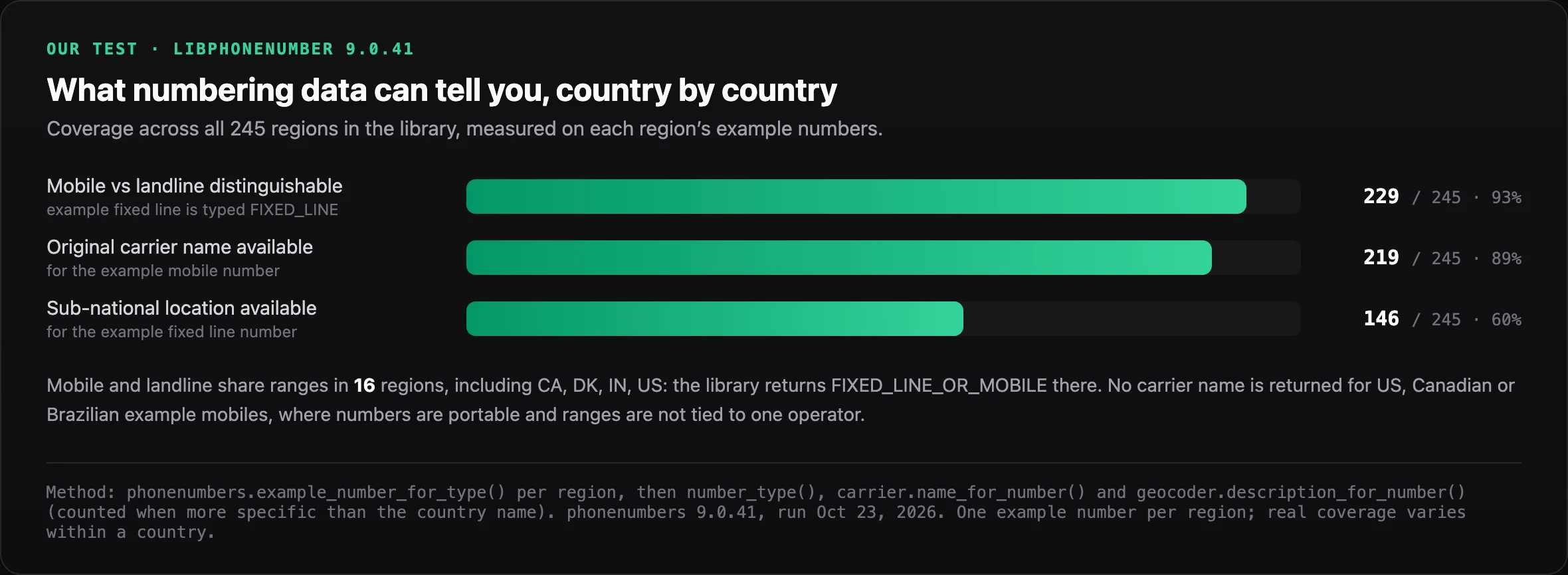
Numbering data is strongest where it matters least for fraud checks. Across the library’s 245 regions, an original carrier name was available for 89% of example mobile numbers, but not in the US, Canada, or Brazil. A sub-national location was available for only 60% of example landlines. And in 16 regions, including the US, Canada, and India, the plan cannot separate mobile from landline at all.
Supported Phone Number Formats
Lookups work best with numbers in the international E.164 format: a plus sign, the country code, and the national number with no spaces or punctuation, up to 15 digits in total (for example +12025550143).
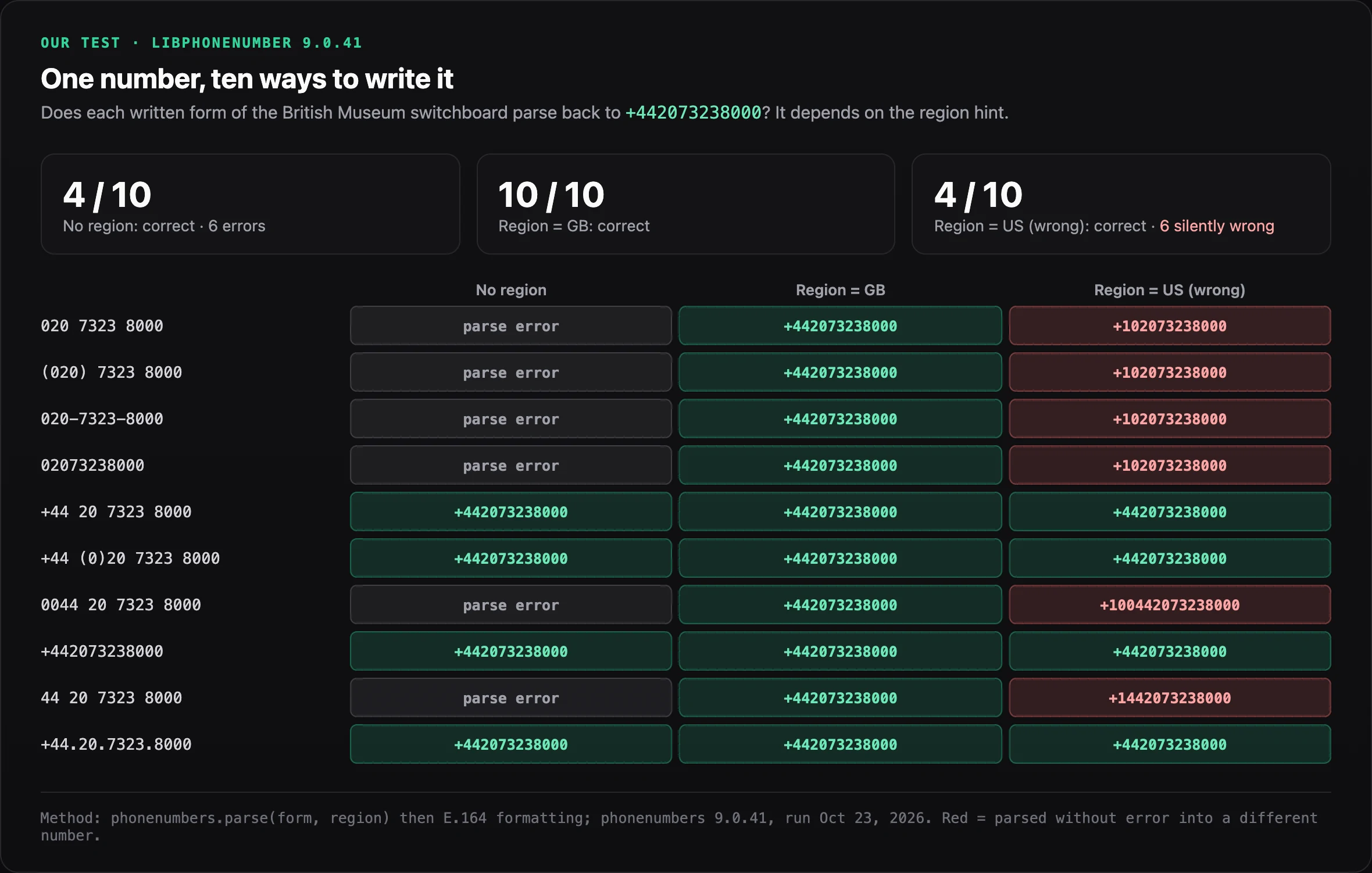
Local formats are ambiguous without a country. Without a region hint, only the four forms that begin with +44 parsed; the other six failed with an error, which is at least visible. With the wrong region hint, those six were silently turned into different, US-style numbers. A failed lookup is a nuisance; a lookup on the wrong number produces confident, wrong results. Always record which country a number came from, and convert it to E.164 before you search.
Search operators for numbers
Pages rarely print numbers in E.164, so search for every common written form at once, then narrow the results:
"020 7323 8000" OR "02073238000" OR "+44 20 7323 8000"
"+44 20 7323 8000" "Ltd" OR "Limited"
filetype:pdf "020 7323 8000" invoice OR brochure
The first line catches the common formats of one number. The second narrows results to pages that also mention a company. The third finds PDFs such as brochures, invoices, and tender documents, which often tie a number to a trading name and registered address. For US numbers, try "(202) 555-0143" and "202-555-0143" as well.
Layers 2 and 3: What a Search Shows
A published business number
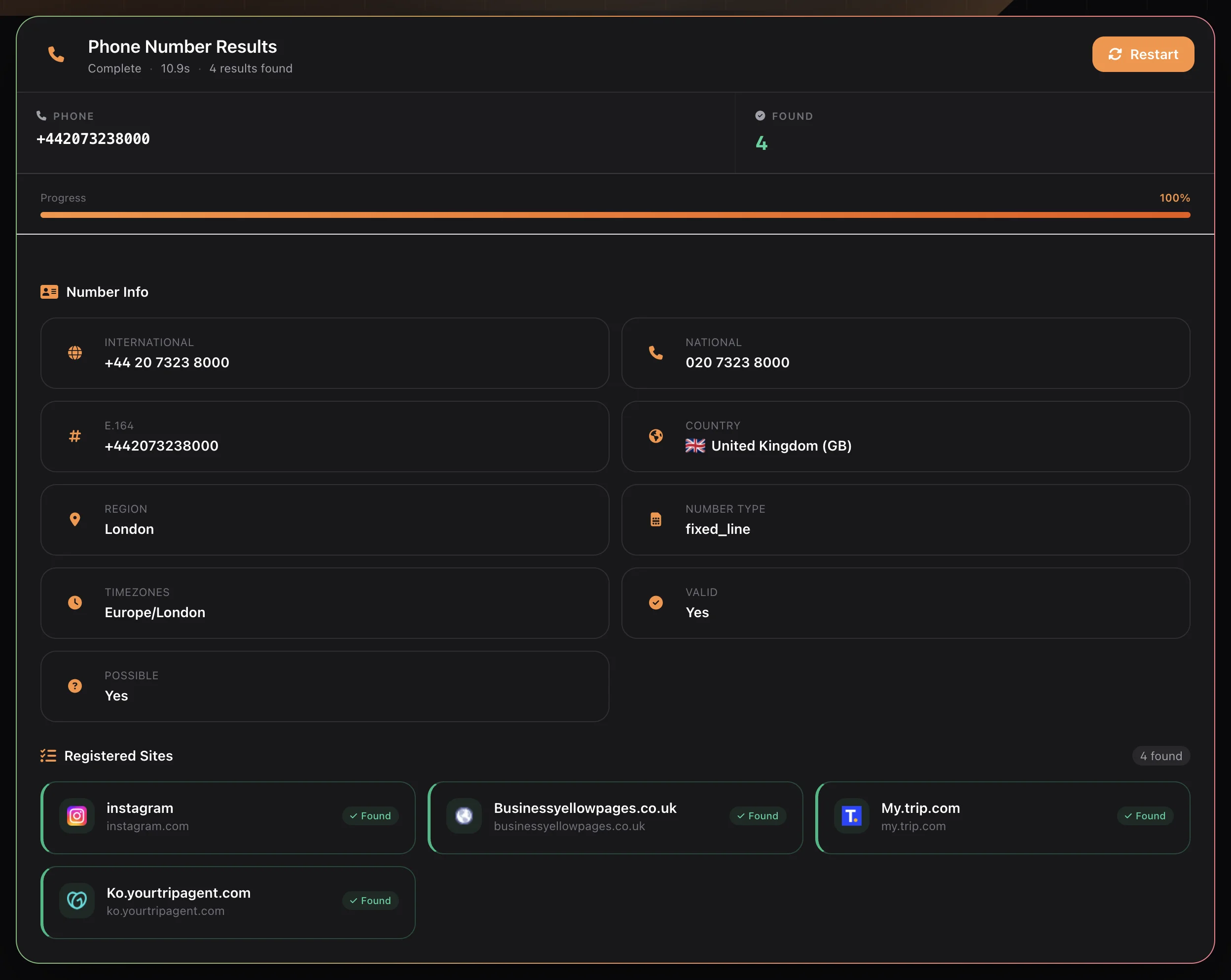
What it shows. The number information matches the libphonenumber output above. Three results are public listings: a UK business directory and two travel sites that print the museum’s contact details. This is the records layer at work: a number that a well-known organization has published for years appears across independent directories, each tying it to the same name and address. The fourth result, instagram.com, turned out not to be a meaningful signal, as the next two tests show.
A number that is never allocated
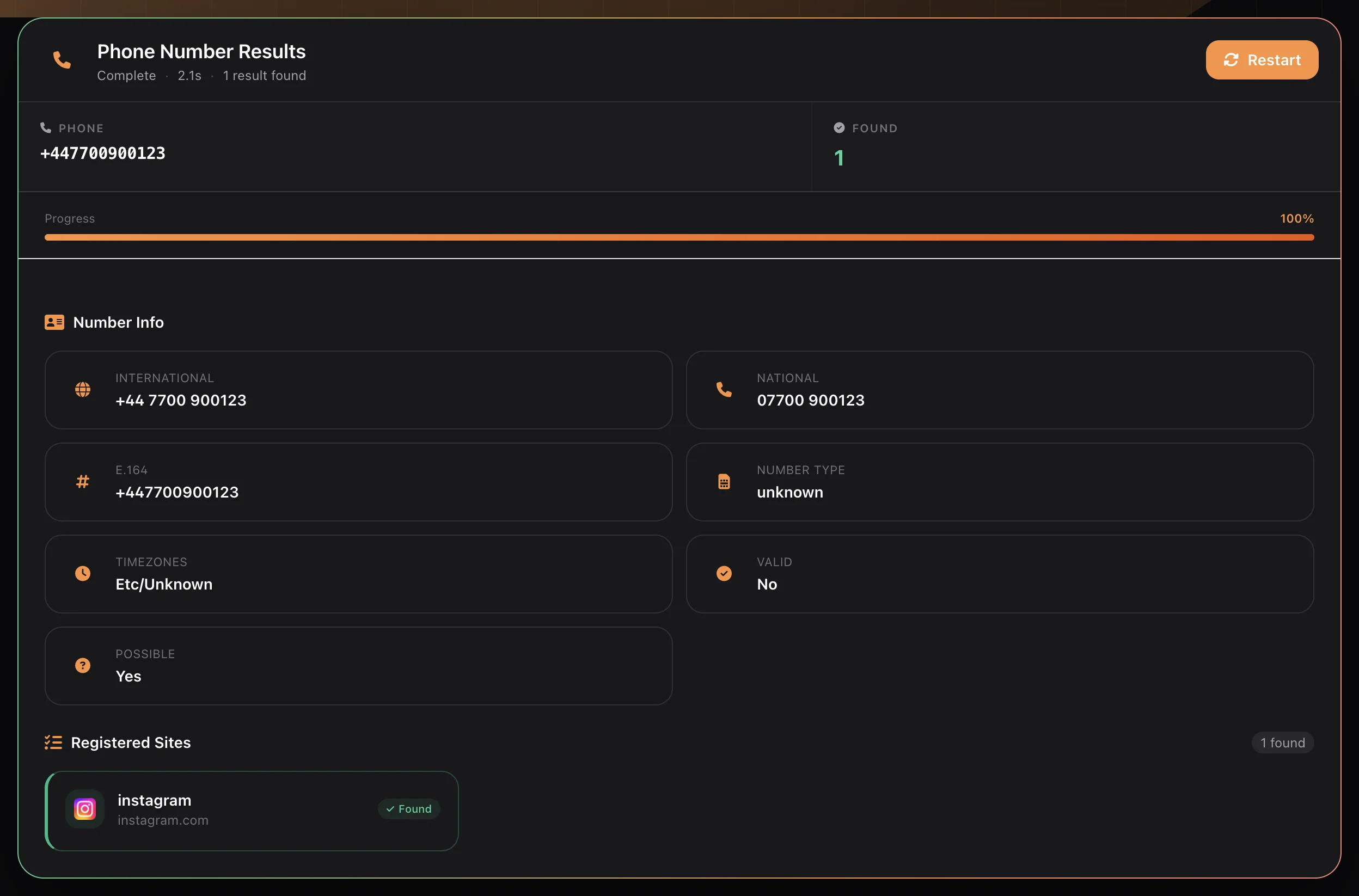
+44 7700 900123 on Holehe OSINT, the same day: type unknown, not valid, and 1 platform result in 2.1 s.What it shows. Ofcom states that numbers in its drama ranges are not allocated to communications providers, so no subscriber can hold this number. The number information correctly flags it as not valid, yet the platform check still answered instagram.com. A result for a number nobody can own cannot be evidence of an account.
Nine searches: how stable are the results?
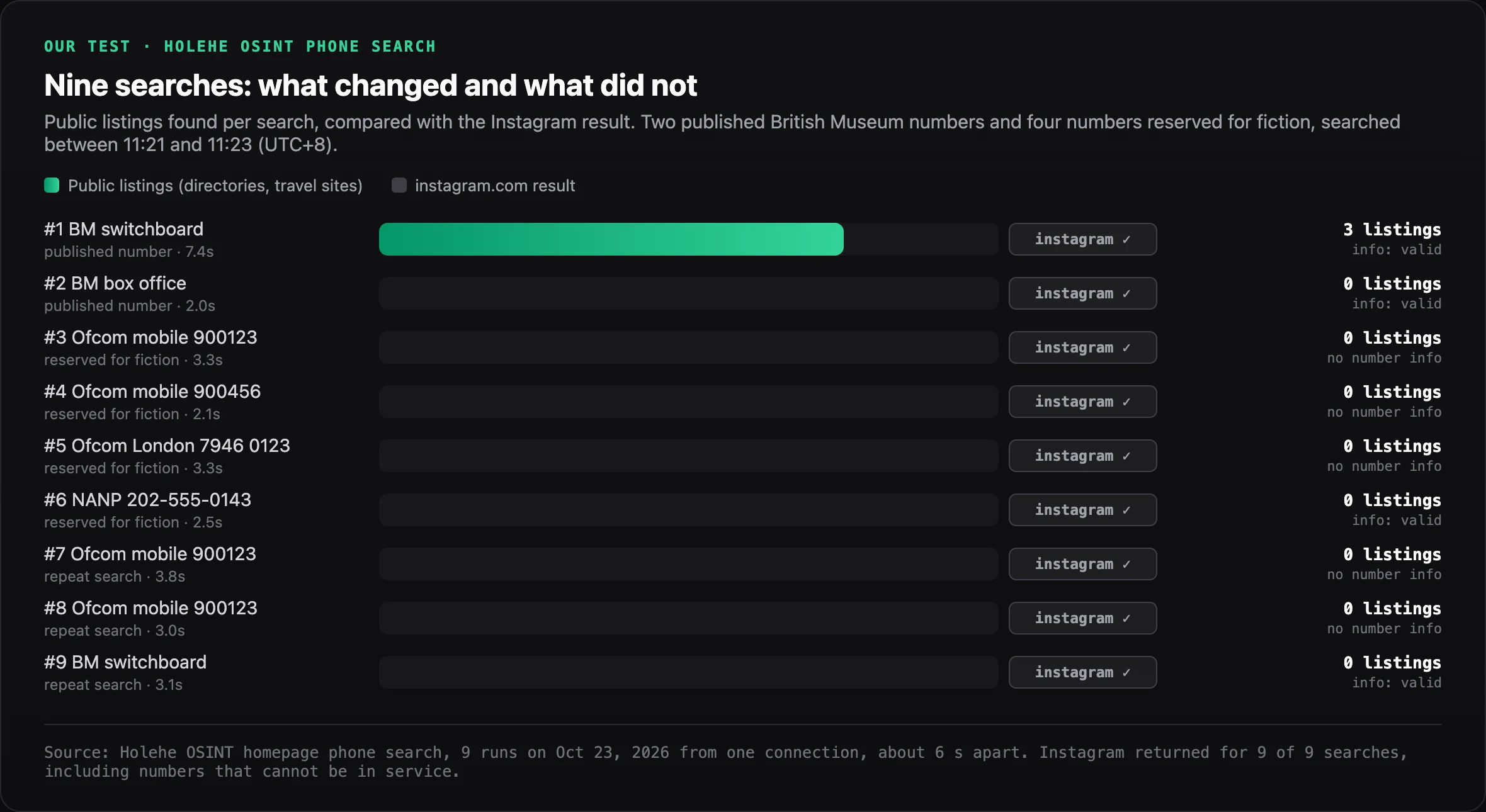
| Signal | Result across 9 searches | What it means |
|---|---|---|
| instagram.com result | 9 of 9, including all 4 reserved numbers | Not informative; excluded from any judgement |
| Public listings, BM switchboard | 3 on the first search, 0 on the repeat 2 minutes later | Web-search results vary between runs; record the date and rerun |
| Public listings, all other numbers | 0 of 7 searches | Consistent with numbers that are not published, or published rarely |
| Number info panel | Shown in 4 of 9 searches; missing in all 5 searches of Ofcom numbers, and absent in this batch even for the 900123 number that showed it in Screenshot 3 | Use a library check such as libphonenumber when the panel is missing |
Two lessons follow. First, a signal that appears for every input carries no information, however convincing it looks on screen. Second, web results drift: the same published number produced three listings and then none, so a single empty result is not evidence that a number has no footprint. Count the layers that agree across repeated checks, not the results of one search.
Business Messaging Checks
Many organizations publish a WhatsApp Business or Telegram contact. Start from what the organization publishes rather than from a number you were given:
- Find the official website independently (not from a link in the message) and note every number it publishes.
- Open the site’s own “click to chat” links and note the business name, description, and linked website.
- Compare them with the number that contacted you. Does it match a published number? Does the business name match the registered company?
- Record what you saw, with the date.
Use a work device and account set up for this purpose, look only at what the business publishes, and do not message the number unless contact is part of an authorized process.
A Practical Checklist
| Step | Check | Strong signal | Weak or misleading signal |
|---|---|---|---|
| 1 | Normalize to E.164 with the right country | One unambiguous number | Guessing the country |
| 2 | Numbering data | Type and area fit the claimed caller | “Valid” on its own |
| 3 | Regulator reserved ranges | Number is outside reserved blocks | Skipping this when a number looks “too neat” |
| 4 | Search operators, all written forms | Independent listings that agree on name and address | One listing, or listings that disagree |
| 5 | Platform and messaging checks | A business profile matching the registered company | A result that appears for every number |
| 6 | Repeat and record | Same result on a second run, dated | One run, undated |
| 7 | Verify through a known channel | The organization confirms via a number already on file | Calling back the number that contacted you |
Worked Example: A Supplier’s New Number
This scenario is illustrative; the company names are fictional, and the number comes from Ofcom’s drama range so it cannot belong to anyone. The finance team at a fictional wholesaler, Kestrel Marine Parts, receives a call from +44 7700 900077. The caller says they work for a long-standing supplier and asks for future payments to go to a new bank account.
- Numbering data: the number is in the UK mobile range, while the supplier has always called from a London landline.
- Records: searching every written form of the number finds no directory listings, filings, or pages connected to the supplier. The supplier’s published landline appears on its website, its invoices, and two trade directories.
- Platform signals: a single platform result adds nothing; as our tests show, some checks return results for any number.
- Call back on a known number: following the payment policy, the team calls the landline already on file. The supplier confirms it has not changed its bank details.
- Outcome: the team rejects the change, records the checks, and escalates internally.
The callback did the decisive work. OSINT showed the number did not fit anything the supplier publishes, which was reason enough to verify through an independent channel.
Common Use Cases for Phone OSINT
- Verifying the legitimacy of an unknown caller or SMS sender, for example whether a number claiming to be your bank appears on the bank’s official site
- Checking whether a number has been reported for spam or scams
- Reviewing a new supplier, partner, or applicant whose contact number has no history
- Confirming carrier and region information before international calls
- Cross-referencing a phone number against email or username OSINT results to confirm that accounts belong together
Limitations of Phone OSINT
Because phone OSINT relies solely on public data, results vary by country and carrier. Keep these limits in mind:
- Portability: carrier data shows the original range holder, not necessarily the current operator.
- Spoofing: the number shown on an incoming call can be faked, so a lookup may describe a number that never actually called you.
- Recycling: operators reassign disused numbers, so old web mentions and platform links may refer to a previous owner.
- VoIP and virtual numbers: these can be obtained quickly and say little about the real user’s location.
- False positives: platform checks can return results that are not real; in our tests one check answered for every number.
- Unstable results: web-search results change between runs, so a missing listing is not proof of absence.
- Thin directories: some regions have limited public listings. A lack of results does not mean a number is inactive or unregistered, only that less public data exists for it.
Legal and Ethical Boundaries
- Personal data rules apply. Under the UK GDPR and EU GDPR, a phone number linked to a person is personal data. Have a lawful purpose, such as fraud prevention, and keep what you collect proportionate to it.
- Carrier records are off limits. In the US, CPNI rules restrict what carriers can disclose about their customers. Subscriber details come through legal process, not OSINT, and attempts to obtain them by pretending to be the account holder are illegal.
- Stay passive. The techniques here review existing records. Sending messages designed to draw out information is no longer research.
- Do not use results to harass, stalk, or locate people.
Never call or message an unknown number just to “test” it. If you suspect a scam, contact the organization through a number you find independently on its official website.
Frequently Asked Questions
Can a reverse phone lookup tell me who owns a mobile number? Not from public data alone. Numbering data describes the range, and owner details held by carriers are private. Public listings can connect a number to a business that published it.
Why does a lookup show the wrong carrier? Most lookups report the operator that holds the number range. If the number was ported to another network, the prefix stays the same. In the US, Canada, and Brazil, libphonenumber returns no carrier at all.
Is a “valid” number a working number? No. In our test, 500 of 500 reserved US 555-01xx numbers and 51 of 60 Ofcom drama numbers were accepted as valid.
Why did the same search give different results? Public-listing results come from web sources that change, cache, and rate-limit. Rerun important checks and record the date of each.
Which numbers are safe to use in examples? Ofcom’s drama ranges in the UK (for example 07700 900000 to 900999) and NANPA’s 555-0100 to 555-0199 in North America are reserved for fiction.
Data Sources and Methodology
| Dataset | Used in | Source and method | Date | Sample |
|---|---|---|---|---|
| US fraud by contact method | Chart 1, key findings | FTC Consumer Sentinel Network Data Book 2024; unverified consumer reports | Published March 2025 | 2.6 million fraud reports |
| Reserved-number validity | Chart 2 | libphonenumber is_valid_number() on Ofcom drama ranges and NANP 555-01xx | Oct 23, 2026 | 60 UK + 500 US numbers |
| Metadata coverage | Chart 3 | libphonenumber example numbers per region; type, carrier, and geocoder lookups | Oct 23, 2026 | 245 regions |
| Format normalization | Chart 4, Screenshot 1 | libphonenumber parse() with no region, GB, and US | Oct 23, 2026 | 10 forms × 3 settings |
| Site searches | Screenshots 2 and 3, Chart 5 | Holehe OSINT homepage phone search, one connection | Oct 23, 2026 | 2 screenshots + 9 batch searches |
Limits of our tests: a single connection, a single day, and a small set of numbers chosen because they do not belong to private individuals. Results for other numbers, countries, and times will differ.
References
- FTC: Consumer Sentinel Network Data Book 2024 and FTC: Top scams of 2024
- google/libphonenumber and the phonenumbers Python package (version 9.0.41)
- Ofcom: Telephone numbers for use in TV and radio drama programmes
- NANPA: 555 line numbers
- ITU-T Recommendation E.164
- British Museum switchboard and box office numbers as published on britishmuseum.org
Related Articles
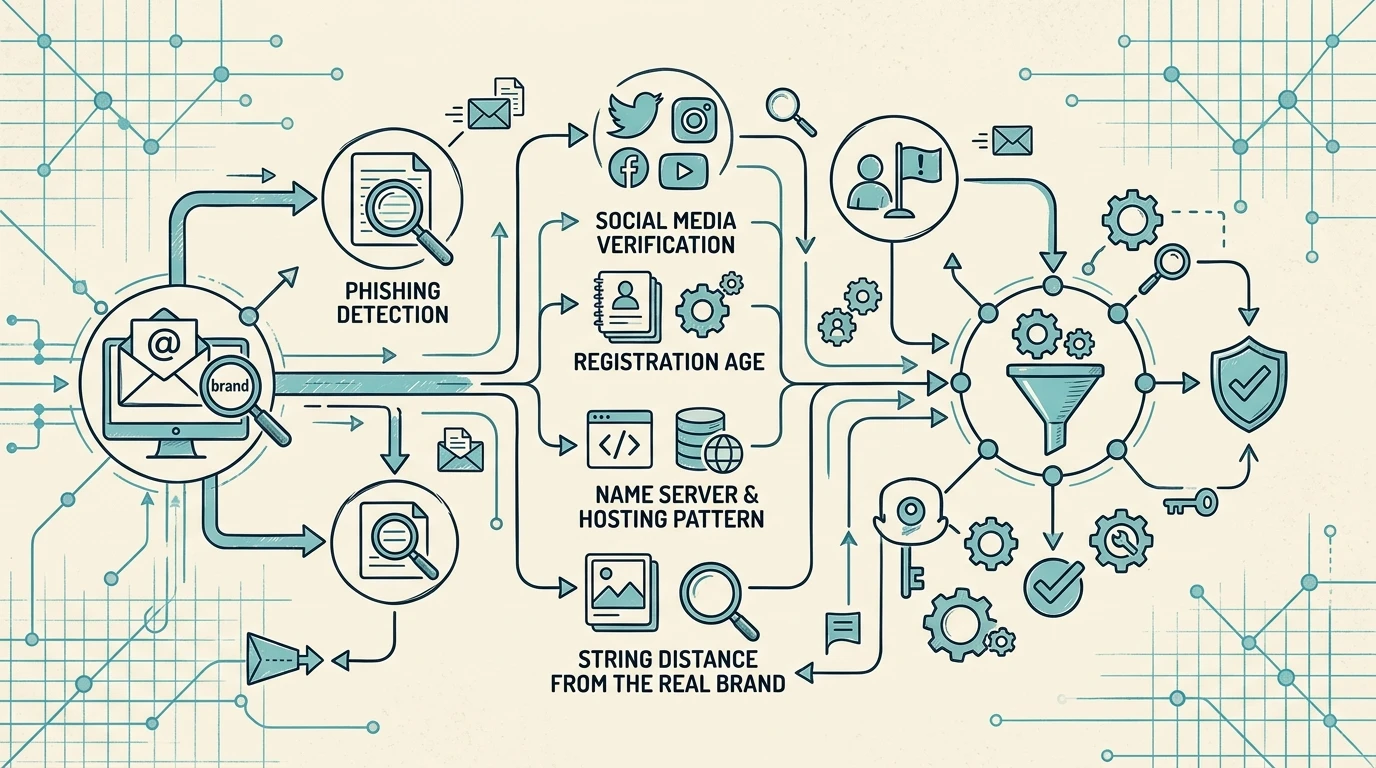
Brand Protection
How to Spot Brand Impersonation Online: An OSINT Checklist Backed by FTC and APWG Data
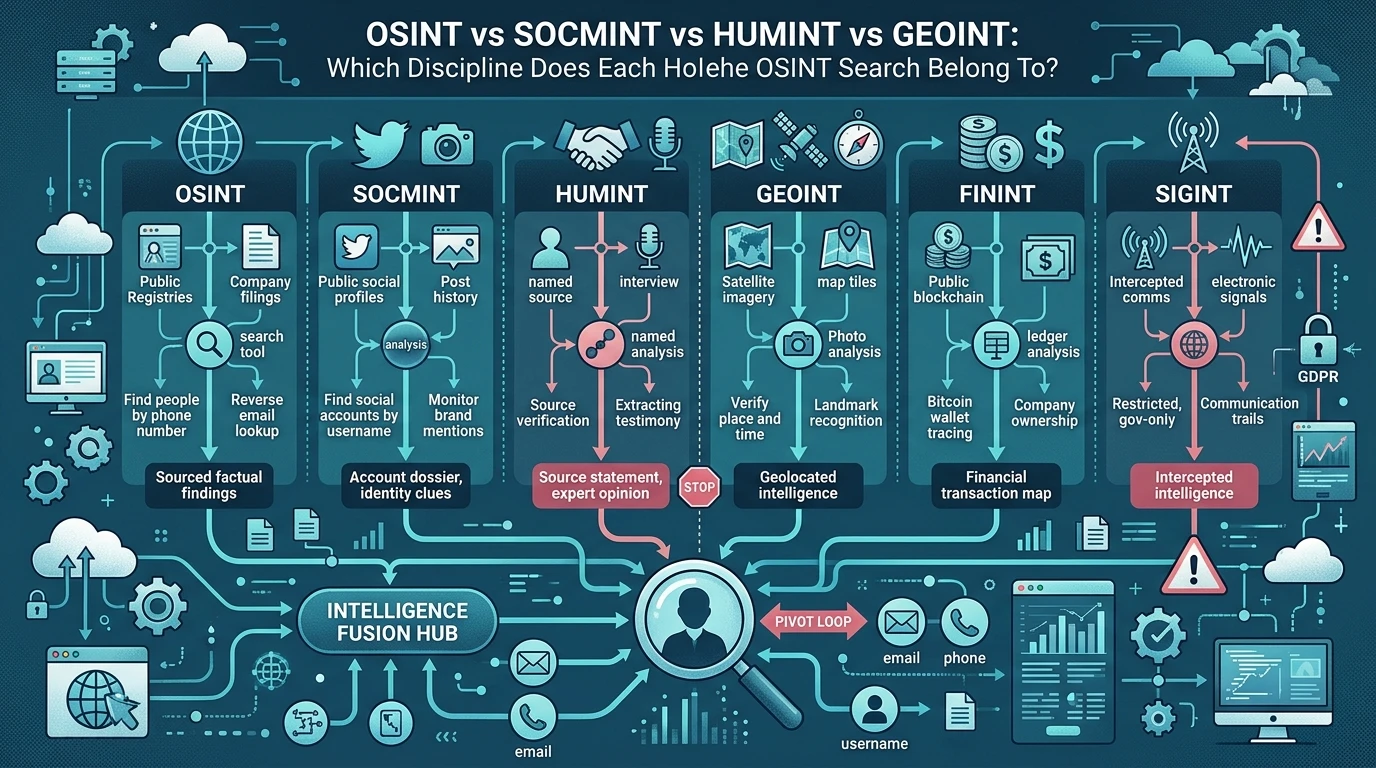
OSINT Guide
OSINT vs SOCMINT vs HUMINT vs GEOINT: Which Discipline Does Each Holehe OSINT Search Belong To?
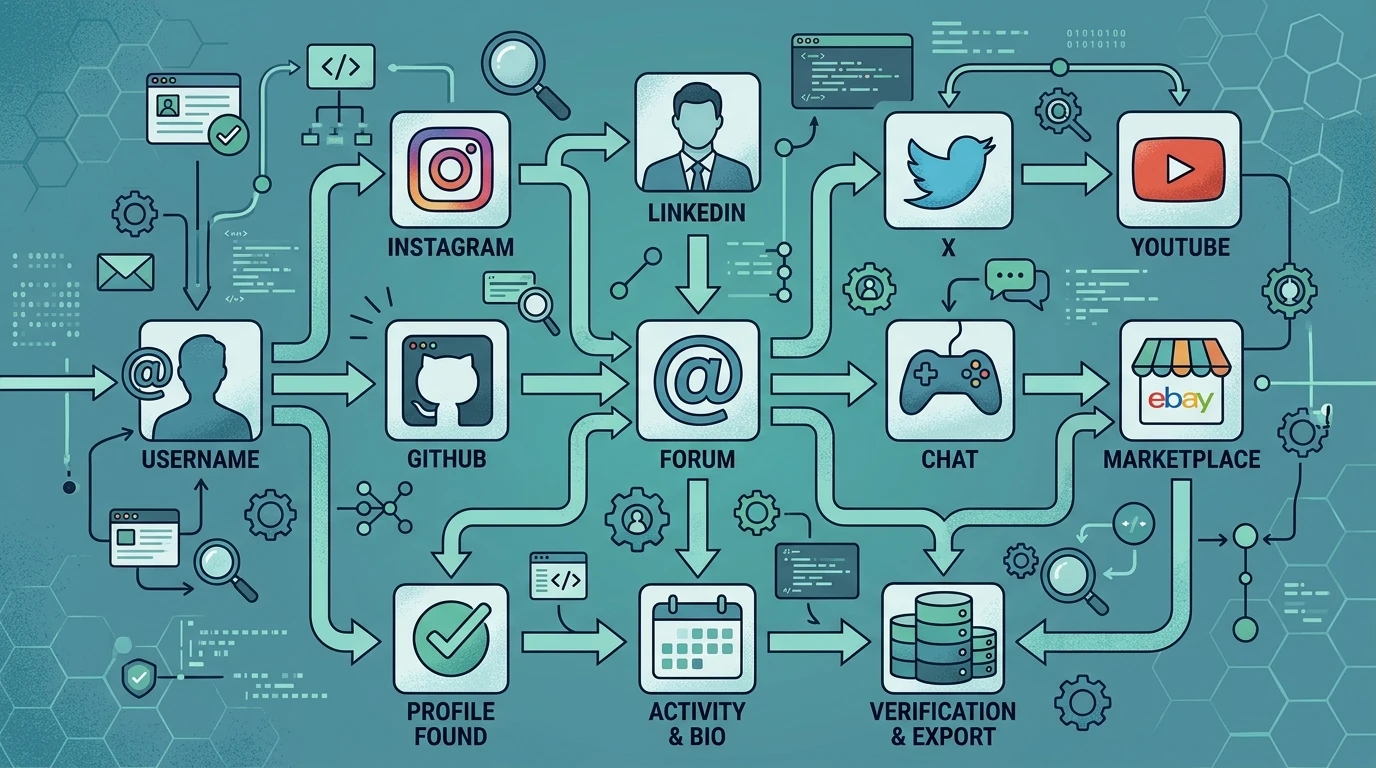
Username OSINT
Mapping a Username Footprint Across Thousands of Sites: A Practical OSINT Workflow